
Business networking events are structured, in-person opportunities where professionals build trust, exchange insights, and create partnerships that drive measurable business growth. The role of events in business networking goes far beyond handing out business cards. 1.65 billion participants joined business events globally in 2025, across more than 180 countries. That scale reflects a simple truth: face-to-face connection remains the most direct path to professional credibility. Whether you attend a local mixer, a trade show, or a VIP roundtable, events give you something no LinkedIn message can replicate.
What is the role of events in business networking?
Events function as the primary engine of professional relationship building. They create a physical context where trust forms faster, conversations go deeper, and opportunities surface organically. The industry term for this practice is professional networking, and events are its most productive format.
Structured event formats accelerate connection in ways that unstructured digital outreach cannot. A round-table introduction forces every attendee to articulate their value clearly and hear others do the same. A guest speaker session gives strangers a shared reference point before they even exchange names. These formats are not accidental. They are designed to reduce the friction of cold introductions and create a natural reason to follow up.
Approximately 50% of U.S. jobs are secured through professional networking rather than traditional applications. That number reframes how you should think about event attendance. Every conference badge you wear and every mixer you attend is a direct investment in your career pipeline, not a social obligation.
What types of business networking events are most effective?
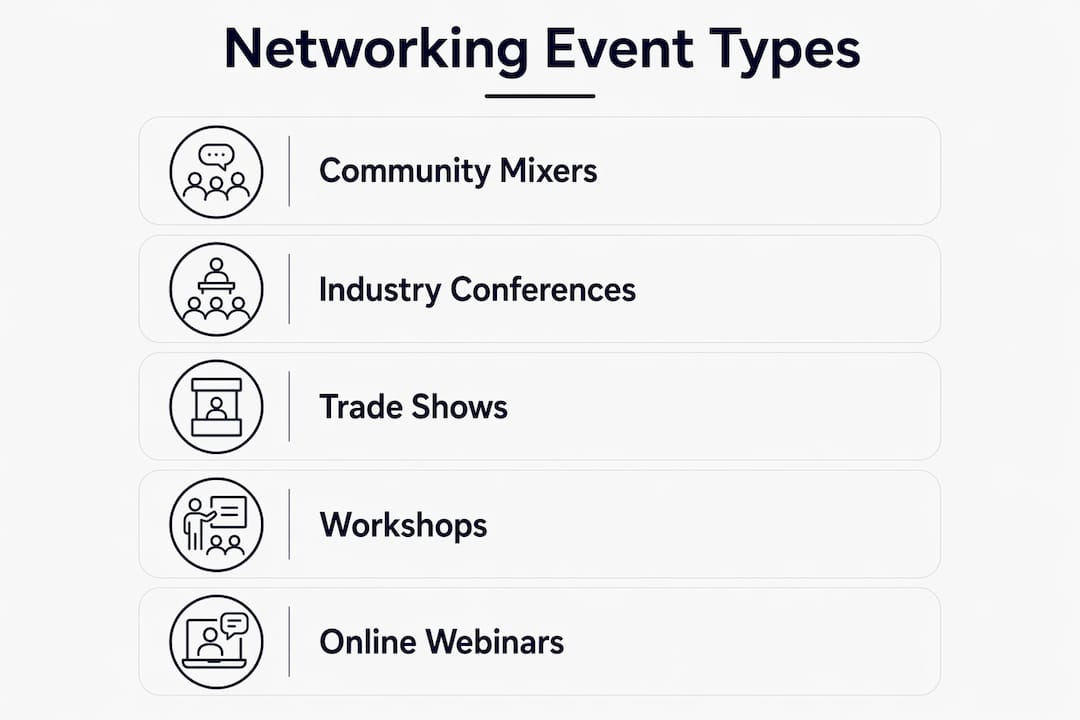
Not every event delivers the same return. The format, audience, and structure of an event determine how useful it is for your specific goals.
| Event type | Best for | Typical cost | Format |
|---|---|---|---|
| Community mixers | Local connections, SMEs | Free to $20 | Open mingling, brief intros |
| Industry conferences | Sector knowledge, visibility | $200–$2,000+ | Panels, keynotes, breakouts |
| Trade shows | Vendor and buyer relationships | Varies by booth | Exhibition, demos, meetings |
| Professional workshops | Skill building, peer learning | $50–$300 | Facilitated group sessions |
| VIP roundtables | Senior decision-makers | Invite-only | Structured discussion, small group |
Networking events typically run 1–3 hours and range from free community mixers to low-cost ticketed events priced around $15–$20. That low barrier to entry makes regular attendance realistic for professionals at any stage.
The most effective events share one feature: a structured agenda. Round-table introductions, moderated Q&A sessions, and designated networking breaks all reduce the awkwardness of cold conversation. They give attendees a reason to talk and a framework for what to say.
Pro Tip: Match the event type to your current goal. If you need clients, trade shows and mixers put you in front of buyers. If you need mentors or strategic partners, VIP roundtables and industry conferences are the better investment.
How do events aid networking compared to online methods?
In-person events build what researchers call organic trust, a quality that digital marketing cannot replicate. When you meet someone face to face, you read body language, tone, and energy. Those signals build confidence in a person far faster than a well-crafted LinkedIn profile.

Face-to-face interactions build trust and communicate authentic values in ways that virtual methods consistently fall short of achieving. Digital networking has real limitations. Video call fatigue is documented and widespread. Text-based messages strip out the nonverbal cues that make a conversation feel genuine. Shallow LinkedIn connections accumulate without producing real relationships.
Events solve these problems by design. Physical presence signals commitment. Showing up to an industry conference says you take your field seriously. Attending a local vendor market says you are invested in your community. Both send credibility signals that no email can match.
"In-person networking events remain the most effective way to develop genuine trust and professional credibility that digital methods struggle to achieve." — Nancy Rubin
The specific advantages of in-person events over digital networking include:
- Body language and tone: You communicate confidence, warmth, and credibility through presence, not just words.
- Shared context: A conference session or trade show floor gives you an immediate conversation topic.
- Memorability: People remember faces and handshakes far longer than email introductions.
- Spontaneous introductions: A hallway conversation or lunch table encounter cannot be engineered online.
What are the key benefits of attending business networking events?
The benefits of attending business networking events fall into three categories: professional growth, business development, and personal support. Most professionals focus on the first two and underestimate the third.
1. Expanded professional network and partnership opportunities
Every event you attend adds potential collaborators, referral sources, and future clients to your circle. A single conversation at a trade show can open a distribution channel that takes years to build through cold outreach.
2. Access to mentorship and industry insight
A strong professional network functions as what CareerAnswer describes as an external brain for career navigation, providing mentorship, industry intelligence, and psychological safety. That framing is accurate. Your network knows things you do not. They see market shifts, hiring trends, and partnership opportunities before those signals reach public channels.
3. Business growth through referrals and collaboration
Referrals from trusted contacts convert at a higher rate than any cold lead. Events are where those referral relationships form. A vendor you meet at a craft fair may send three clients your way over the next year because they remember your booth and your conversation.
4. Emotional and strategic support
For small businesses, networking's greatest benefit is often the trusted peer network that provides emotional and strategic support during economic challenges. This benefit rarely appears in networking guides. When your business hits a rough quarter, a peer who has navigated the same problem is more valuable than any consultant.
5. Career development and job opportunities
With half of U.S. jobs filled through networking, consistent event attendance is not optional for serious career development. It is the most reliable job search strategy available.
How can you maximize the value of business networking events?
Attending events is the first step. Getting real value from them requires preparation, presence, and follow-through. Most professionals skip at least one of these three.
Before the event
Research the attendee list and speaker lineup before you arrive. Identify three to five people you want to meet and know one specific reason you want to connect with each of them. Prepare a clear, two-sentence description of what you do and who you help. Vague introductions waste the limited time you have in a room full of potential contacts.
During the event
Success at networking events depends on presence and building a few meaningful conversations rather than trying to meet everyone. Three deep conversations beat fifteen shallow ones every time. Ask questions that go beyond job titles. Ask what someone is working on, what challenge they are trying to solve, or what opportunity they are most excited about. Those questions open real conversations.
- Focus on listening more than pitching. People remember those who made them feel heard.
- Exchange contact information only after a genuine conversation, not as a reflex.
- Take brief notes on your phone immediately after each conversation while details are fresh.
After the event
The most valuable outcomes from networking events materialize 3–6 months after initial meetings through consistent, low-pressure follow-ups. That timeline surprises most people. They expect immediate results and give up when none appear. The professionals who win at networking send a short, specific follow-up message within 48 hours, then stay in touch with relevant content or check-ins over the following months.
Pro Tip: Shift your mindset from "what can I get from this event" to "what relationships can I start here." Networking is a long-term growth strategy, not a sales call. The contacts who matter most will rarely become clients or partners within the first month.
Networking positions you strategically among decision-makers for long-term credibility rather than functioning as a hard-sell activity. That distinction separates professionals who build lasting networks from those who collect business cards and wonder why nothing happens.
Key takeaways
Events are the most reliable format for building the professional trust and relationships that drive long-term business growth.
| Point | Details |
|---|---|
| Events build organic trust | Face-to-face interaction creates credibility that digital outreach cannot replicate. |
| Format determines value | Match event type to your goal: mixers for local reach, conferences for industry visibility, roundtables for senior access. |
| Quality over quantity | Focus on 3–5 meaningful conversations per event rather than collecting as many contacts as possible. |
| Follow-up drives results | Most networking outcomes materialize 3–6 months post-event through consistent, low-pressure follow-up. |
| Peer support is underrated | For small businesses, the emotional and strategic support from a trusted peer network is often the highest-value networking outcome. |
What I have learned from years of watching events drive real business growth
Most professionals treat event attendance as a checkbox. They show up, collect a few cards, and move on. The ones who actually build their businesses through networking treat events as the start of a relationship, not the whole relationship.
At Boothspace, we work with vendors and event organizers across farmers markets, trade shows, and craft fairs every day. The pattern we see consistently is this: the vendors who grow fastest are not the ones with the best products at launch. They are the ones who show up to events repeatedly, build recognition over time, and let trust accumulate naturally. A vendor who attends the same market three months in a row becomes a familiar face to organizers and neighboring vendors. That familiarity turns into referrals, collaborations, and opportunities that never appear in any marketplace listing.
The shift from digital-first to hybrid networking is real, and it is accelerating. But the professionals who benefit most are not simply adding more events to their calendar. They are being deliberate about which events they attend, what they want to learn, and who they want to meet. Networking is a skill. Like any skill, it improves with practice, reflection, and a clear strategy. The good news is that the bar is low. Most people at any given event are hoping someone else will start the conversation. Be that person.
— Boothspace
Discover and host networking events with Boothspace
Boothspace connects vendors and event organizers in one marketplace built for trade shows, farmers markets, craft fairs, and community events.
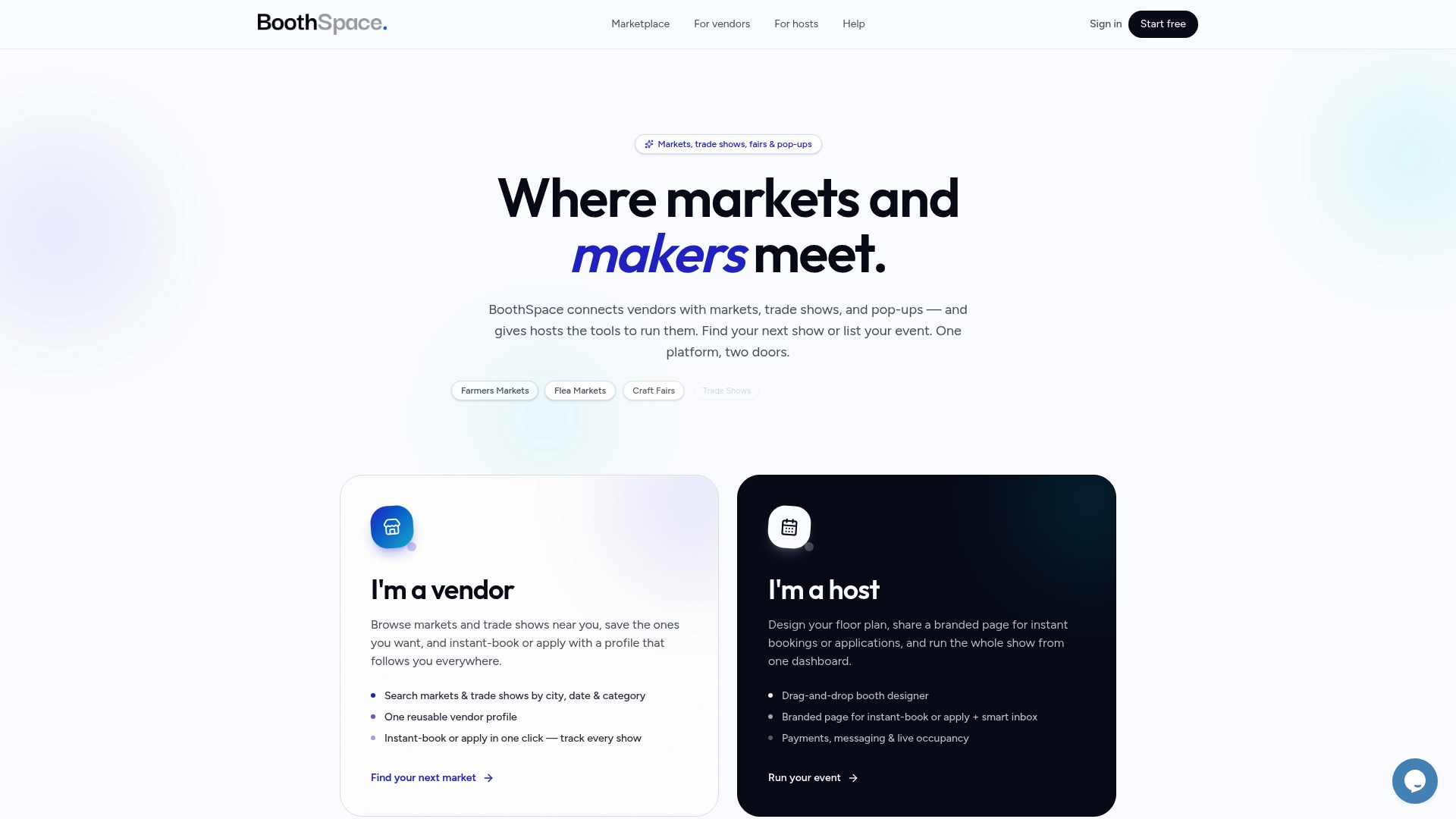
Whether you are a professional looking for your next vendor market opportunity or an organizer ready to host your next event, Boothspace gives you the tools to make it happen. Vendors can browse events, apply for booths, and manage applications from a single profile. Organizers can handle vendor management, booth assignments, and floor plan design without juggling spreadsheets. Every event on Boothspace is a networking opportunity waiting to happen. Start building the connections that grow your business at Boothspace.
FAQ
What is the role of events in business networking?
Events create structured, in-person environments where professionals build trust, exchange insights, and form partnerships. They accelerate relationship development in ways that digital channels cannot replicate.
How do networking events help with career growth?
Approximately 50% of U.S. jobs are filled through professional networking rather than formal applications. Regular event attendance puts you in front of decision-makers and expands your access to unadvertised opportunities.
What types of business networking events are most valuable?
The most valuable event type depends on your goal. Community mixers work well for local connections, industry conferences build sector visibility, and VIP roundtables provide access to senior decision-makers.
How soon should you follow up after a networking event?
Send a specific follow-up message within 48 hours of the event. The most meaningful outcomes from networking typically develop 3–6 months after initial contact through consistent, low-pressure communication.
Are in-person networking events better than online networking?
In-person events build organic trust through body language, shared context, and physical presence that digital methods consistently fall short of achieving. Online networking supplements in-person relationships but rarely replaces them.