
Negotiating booth rental terms with event organizers is a strategic process that directly reduces costs and strengthens contract protections before a single vendor sets up. Space rental at major events ranges from $20 to over $100 per square foot, and total operational costs for a three-day show can exceed $30,000. Those numbers make every clause and every dollar you negotiate matter. This guide gives you the frameworks, timing, and contract tactics that experienced organizers use to secure better deals at farmers markets, craft fairs, trade shows, and festivals.
What are the key components of booth rental agreements organizers negotiate?
Booth rental agreements cover far more than a single line-item price. Organizers who focus only on the base rate leave significant value on the table. The full scope of a vendor contract includes financial terms, legal protections, and value-added elements that shape the entire event relationship.
Financial and payment terms are the starting point for any negotiation:
- Base rental rate per square foot or per booth unit
- Deposit amount and due date relative to the event
- Payment schedule, including installment options for larger vendors
- Late payment penalties and grace periods
Contractual protections are where most organizers underinvest their attention:
- Cancellation clauses and the conditions that trigger them
- Definitions of "material changes" to the event, such as venue shifts or date changes
- Refund policies and the timeline for processing them
- Independent contractor language that clarifies vendor status and liability
Value-added elements are often negotiable but rarely listed publicly:
- Preferred booth location or corner placement
- Inclusion in event marketing materials, social media, or email campaigns
- Complimentary exhibitor passes or parking
- Flexibility to swap booth sizes or configurations before move-in
Standard contracts favor the organizer by limiting refund rights and leaving "material changes" loosely defined. Vendors who read the fine print and push back on these clauses before signing are the ones who walk away with real protections.
When is the best time to negotiate booth rental terms?
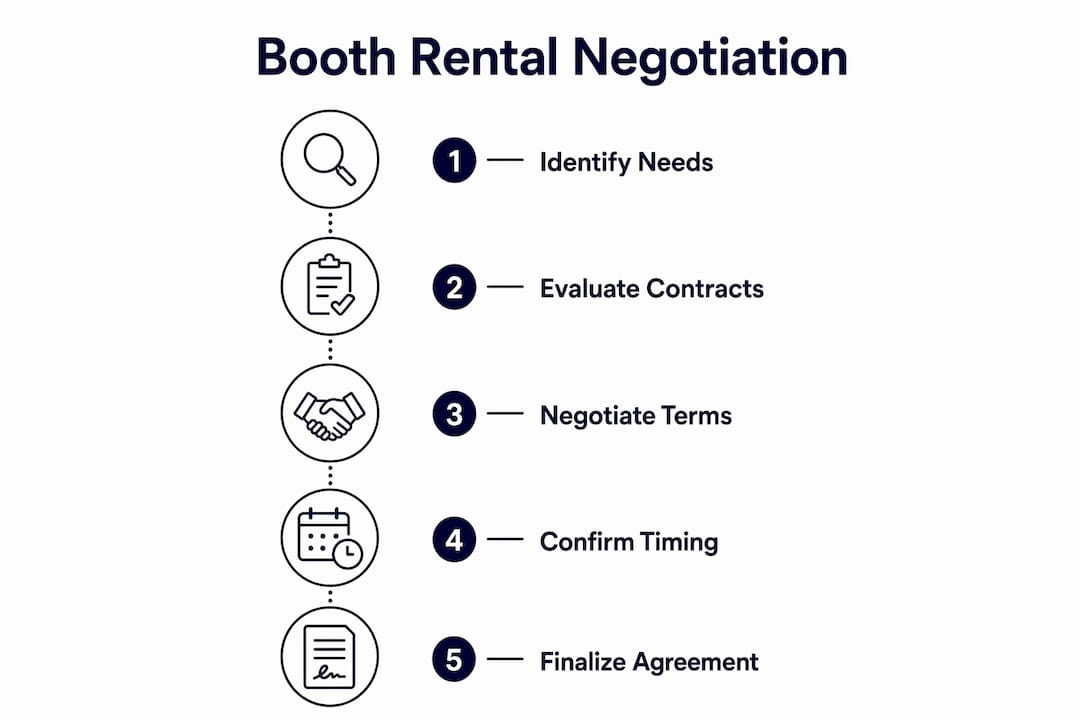
Timing is the single most underused lever in booth rental negotiations. Most vendors wait until they receive a contract, which is already too late to influence the best terms.

The most effective negotiation window is 8–10 weeks before move-in, when organizer account teams are actively working to hit early-order revenue targets. At that point, organizers have real incentive to offer concessions in exchange for confirmed commitments. Waiting until two weeks out means the organizer has already filled most inventory and has no pressure to flex.
Early engagement also gives you access to non-public options. Organizers often hold soft inventory, meaning booths or packages not yet listed, that they release to vendors who ask early and commit quickly. Monitoring an organizer's announcement schedule and registration opening dates tells you exactly when to make your move.
Pro Tip: Track the organizer's revenue calendar, not just the event date. When registration opens and early-bird deadlines pass, the organizer's urgency to fill remaining spots increases. That urgency is your leverage.
Off-peak timing creates additional advantages. Vendors who book during slower registration periods, or who commit to multiple dates in a single conversation, give organizers predictable revenue. Predictability is worth money to any event host, and smart vendors use that fact explicitly in their opening ask.
What negotiation strategies yield the best results with booth rental organizers?
The most effective approach to negotiating booth rental terms is mutual problem-solving, not positional bargaining. Harvard and Karrass negotiation experts confirm that organizers respond better when vendors share their constraints and goals openly, because transparency prompts the organizer to reveal hidden inventory or flexible packages that never appear in the published rate card.
Here is a practical four-step process that experienced vendors use:
- Build your trade map before the first conversation. List every issue you care about, from price to location to marketing inclusion, and rank them by priority. A trade map lets you give up lower-priority items in exchange for higher-priority ones without damaging the relationship.
- Open with a package ask, not a discount ask. Requesting a flat percentage off the rate is the most predictable move a vendor can make. Instead, ask for a bundle: a corner booth plus one social media mention plus two extra passes. Bundles are harder for organizers to price-check and easier for them to approve.
- Use one voice throughout the negotiation. A negotiation team of 2–3 people with a designated lead prevents contradictory messages and keeps the organizer from playing team members against each other. Assign one person to speak, one to take notes, and one to observe body language or tone.
- Follow up in writing after every conversation. Verbal agreements disappear. A short email summarizing what was discussed and what was agreed creates a paper trail that protects both sides.
Pro Tip: Ask for "soft holds" on premium booth locations before you finalize payment. Many organizers will reserve a spot for 48–72 hours while you review the contract. That window gives you time to negotiate without losing the location.
Real savings of 25% or more come from bundled requests and soft holds, not from haggling over the base rate. Organizers who understand this shift their entire approach from price negotiation to value negotiation.
How do you handle contract terms and contingencies in booth rental deals?
Contract review is where negotiation moves from conversation to commitment. Most vendors sign organizer-provided contracts without revision, which is a significant mistake. The standard language in these agreements protects the organizer first.
Focus your review on these four areas before signing any booth rental agreement:
- Cancellation clauses: Confirm whether the organizer can cancel the event and what compensation you receive. Vague language like "reasonable notice" is not acceptable. Push for a specific dollar amount or full refund within a defined number of days.
- Material change definitions: If the organizer moves the venue, changes the date, or significantly reduces attendance marketing, you need the right to withdraw without penalty. Define "material change" explicitly in the contract.
- Refund rights: Negotiate a clear refund schedule tied to specific cancellation timelines. A 90-day cancellation should return more than a 30-day cancellation. That sliding scale protects your deposit.
- Show substitution and credit rollover: Contracts should include explicit provisions for show substitution and credit rollover, so that if an event is canceled or significantly altered, your investment carries forward to a future event rather than disappearing.
"The goal is not to make the contract adversarial. The goal is to make it accurate. A well-written contract protects both the vendor and the organizer by removing ambiguity before problems arise."
Risk allocation is a two-way conversation. Organizers who push back on every vendor request for contract clarity often lose good vendors to events that offer more transparent terms. Framing your requests as "let's make sure we both understand the rules" rather than "I don't trust you" keeps the relationship intact while you negotiate the language.
How do multi-show agreements improve your booth rental terms?
Multi-show agreements are the most underused tool in booth rental negotiation. Vendors who commit to multiple events in a single deal give organizers something they value above almost everything else: predictable revenue.
Multi-show rental agreements reduce per-show costs by 20–35% compared to single-show bookings. In high-traffic cities, they also unlock priority warehouse handling and rate caps on drayage fees, saving an additional $2,000–$5,000 per show. Those savings compound quickly across a full event calendar.
The table below shows how single-show and multi-show terms typically compare:
| Term | Single-show booking | Multi-show agreement |
|---|---|---|
| Per-show cost reduction | Baseline rate | 20–35% below baseline |
| Drayage fee savings | Standard rate | $2,000–$5,000 per show |
| Booth location priority | First-come basis | Preferred or reserved |
| Rate cap protection | None | Locked for agreement term |
| Organizer flexibility | Limited | Higher, due to revenue certainty |
Multi-year commitments reduce organizer revenue risk and create leverage for rate freezes, discounts, and advantageous placement. Frame the conversation as a mutual benefit: you get cost certainty, and the organizer gets a reliable vendor who fills space and drives foot traffic. That framing shifts the dynamic from vendor-asking-for-discount to partner-proposing-a-deal.
Plan your full show calendar before entering any multi-show negotiation. Knowing which events you want to attend across a 12-month period lets you walk into the conversation with a specific proposal rather than a vague interest in "doing more shows together."
Key takeaways
Effective booth rental negotiation requires timing, preparation, and contract clarity working together, not any single tactic applied in isolation.
| Point | Details |
|---|---|
| Negotiate 8–10 weeks out | Organizer revenue pressure is highest in this window, giving vendors maximum leverage. |
| Use a trade map | Prioritize every issue before talks begin so you can trade low-priority items for high-priority wins. |
| Request bundles, not discounts | Package asks for location, marketing, and passes are harder to refuse than flat rate cuts. |
| Protect contract terms | Define cancellation rights, material changes, and credit rollover clauses before signing. |
| Commit to multi-show deals | A multi-event commitment can reduce per-show costs by 20–35% and unlock priority placement. |
The negotiation mistake most organizers make
Here is what I have seen consistently across hundreds of booth rental conversations: organizers treat negotiation as a transaction that happens once, right before signing. That framing costs them money and goodwill every single time.
The vendors who get the best terms are the ones who start building the relationship months before they need anything. They attend organizer info sessions, ask thoughtful questions, and show up as partners before they show up as buyers. By the time the contract conversation starts, the organizer already wants them in the event. That desire is leverage, and it costs nothing to build.
I have also watched vendors destroy good relationships by negotiating in bad faith, pushing for concessions they had no intention of using, or sending mixed messages because two people on their team were both talking to the organizer. A clear internal alignment before any external conversation is not optional. It is the difference between a deal that closes and one that falls apart over a misunderstanding.
The other mistake is treating the signed contract as the end of negotiation. The best organizer relationships include a post-event debrief where both sides discuss what worked, what did not, and what the next agreement should look like. That conversation, done well, is where the real long-term value gets built. You can manage those conversations and track your vendor relationships more effectively through Boothspace's event management tools, which keep all communication and agreement history in one place.
— Boothspace
Manage booth rentals and negotiations with Boothspace
Running a market or festival means managing dozens of vendor relationships, booth assignments, and contract details at once. Boothspace gives event hosts a centralized platform to handle all of it.
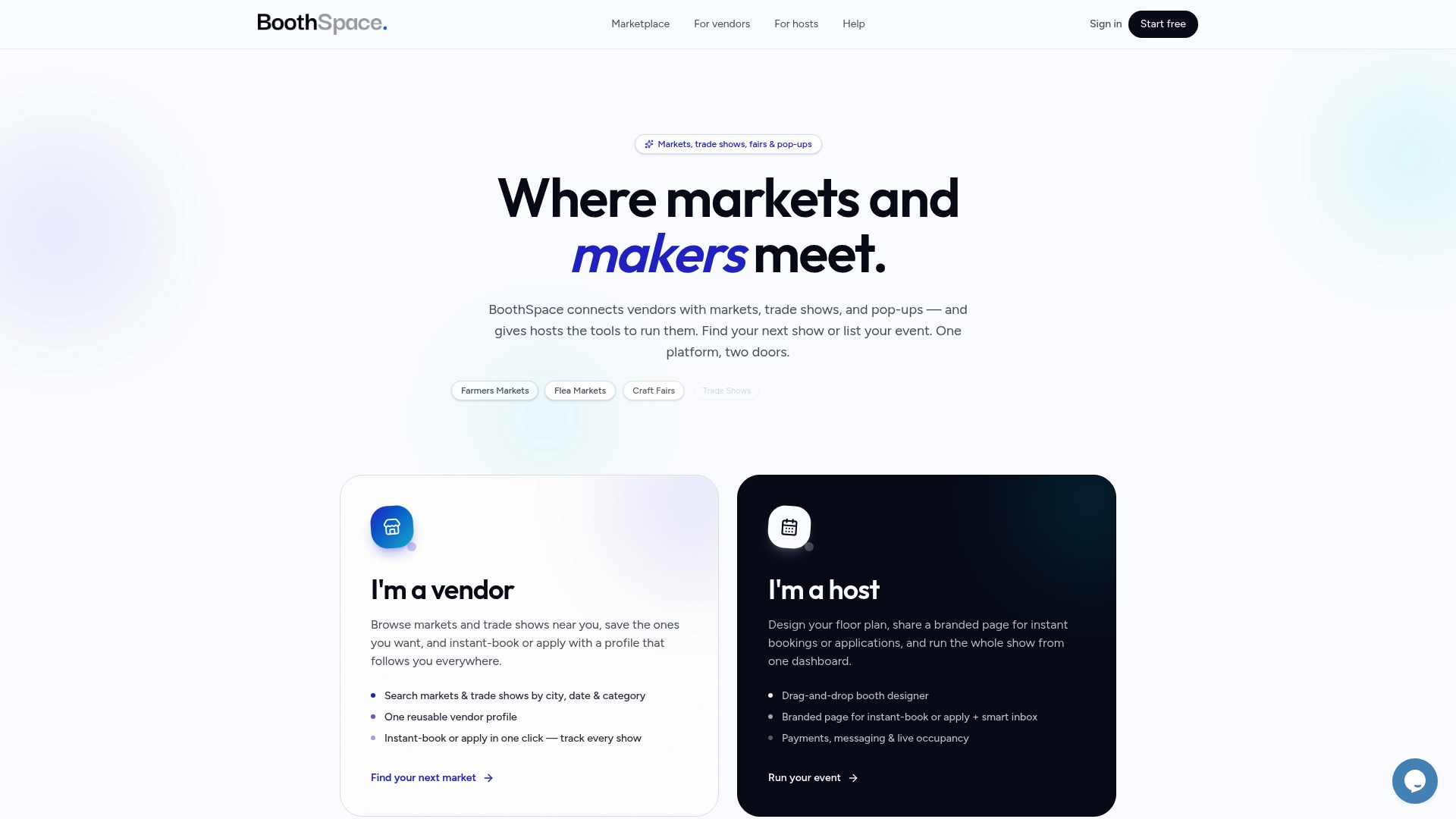
With Boothspace, you can review vendor applications, assign booth locations using an interactive floor plan, and communicate with vendors through a unified inbox. The platform gives you real-time visibility into booth inventory, so you always know what is available and what is committed before any negotiation conversation starts. That visibility is exactly the kind of preparation that leads to better terms for everyone involved. Run your next event with Boothspace and give yourself the tools to negotiate from a position of clarity rather than guesswork.
FAQ
What is the best time to negotiate booth rental terms?
The best time to negotiate is 8–10 weeks before move-in, when organizers are actively working to meet early-order revenue targets and have the most flexibility to offer concessions.
What should booth rental agreements always include?
Every booth rental agreement should define cancellation rights, material change conditions, refund timelines, and credit rollover provisions to protect both the vendor and the organizer.
How much can multi-show agreements reduce booth rental costs?
Multi-show agreements typically reduce per-show costs by 20–35% compared to single-show bookings, with additional savings of $2,000–$5,000 per show on drayage fees in major cities.
What is a trade map in booth rental negotiation?
A trade map is a prioritized list of every negotiation issue, used to identify which lower-priority items you can concede in exchange for higher-priority wins without damaging the relationship.
Should vendors negotiate booth rental contracts before signing?
Yes. Standard organizer contracts favor the organizer by limiting refund rights and leaving key terms vague. Vendors should review and negotiate contract language before signing, not after.