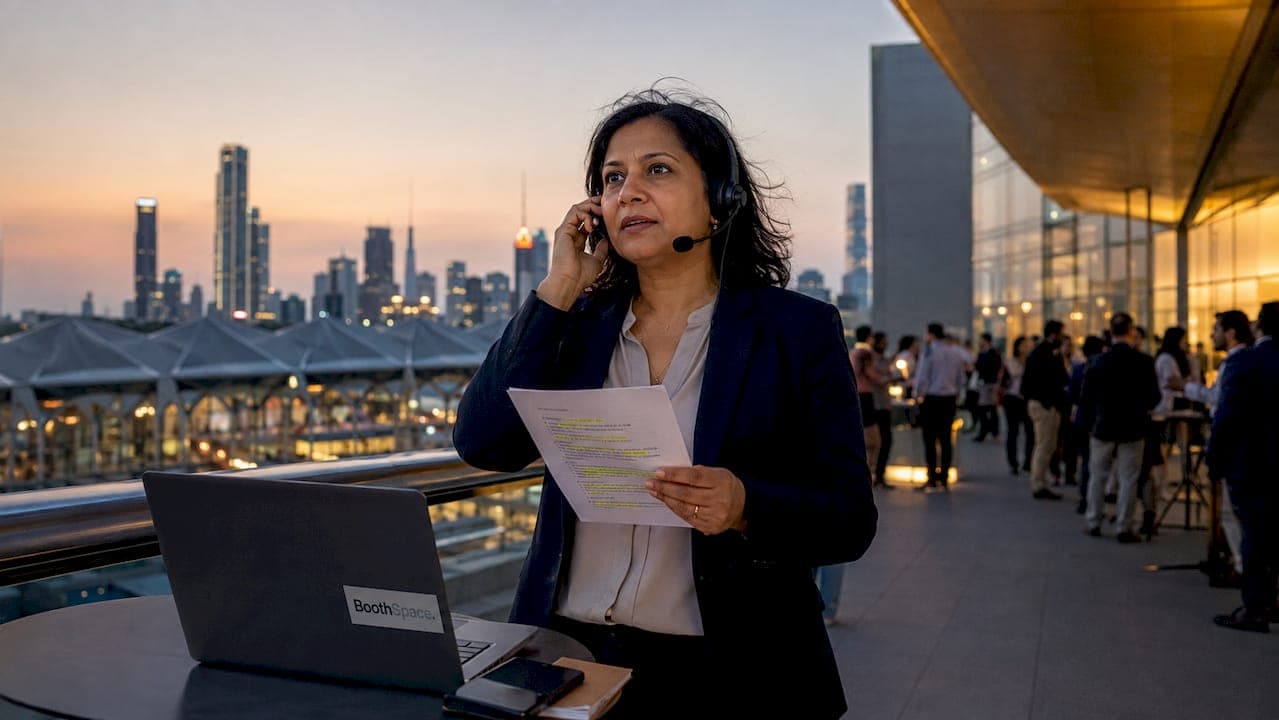
Exhibitor communication best practices are the structured methods event organizers and exhibitors use to deliver the right message, to the right person, at the right time across every phase of an event. Leads contacted within 48 hours convert at 5–7 times higher rates than those reached after a week. That single fact explains why timing, segmentation, and personalization are not optional extras. They are the core of every high-performing exhibitor strategy. Tools like Exhibitor Service Centers, lead capture apps with CRM integration, and qualification frameworks like BANT give both organizers and exhibitors the structure to turn conversations into pipeline.
1. What are the essential timing strategies for exhibitor communication?
Timing is the single biggest variable in exhibitor communication. Get it wrong and even the best message lands flat.

Starting exhibitor communication at least 5 months before the event with monthly newsletters and structured checkpoints reduces confusion and improves exhibitor preparedness. That lead time gives exhibitors space to plan booth design, staffing, and outreach without scrambling at the last minute. Centralized Exhibitor Service Centers and deadline checklists remove the guesswork entirely. They also help exhibitors avoid late fees, which adds up to real cost savings across a multi-day event.
Pre-event communication phases
- 5 months out: Send a welcome packet with event overview, key dates, and booth assignment details.
- 3 months out: Deliver a logistics newsletter covering shipping deadlines, setup schedules, and service ordering.
- 6 weeks out: Share an attendee profile summary so exhibitors can tailor their messaging and demos.
- 2 weeks out: Send a final checklist with badge pickup, Wi-Fi credentials, and floor plan access.
- 48 hours before: Confirm booth details and provide an emergency contact for on-site issues.
This cadence builds trust. Exhibitors who feel informed before the event show up prepared, engage attendees more confidently, and report higher satisfaction scores.
Post-event timing matters just as much. An optimal follow-up sequence runs 6–7 touchpoints over 90 days, starting with a personalized email within 48 hours. Days 7–10 reinforce key insights from the event. Days 14–21 introduce proof points like case studies or testimonials. Days 30–45 deliver educational resources. Days 60–75 include a soft check-in to gauge continued interest. This structure keeps your brand present without overwhelming the contact.
Pro Tip: Draft your entire post-event follow-up sequence before the event starts. You will not have time to write personalized emails while processing hundreds of leads after a three-day show.
2. How can lead qualification frameworks improve communication effectiveness?
Raw badge scans are not leads. They are a list of names. The difference between a productive post-event week and a wasted one comes down to how well you qualified contacts during the event.
High-performing teams define conversion criteria before the event starts and focus on behavioral insights rather than raw traffic counts. This means deciding in advance what makes someone a hot lead versus a cold contact. Without that definition, every follow-up gets the same generic treatment, and conversion rates suffer.
Using BANT at the booth
BANT stands for Budget, Authority, Need, and Timing. It is a qualification framework originally developed for B2B sales, and it translates directly to trade show conversations. A quick four-question mental checklist during a booth conversation tells you whether to prioritize that contact for same-day follow-up or route them to a nurture sequence.
Using qualification frameworks like BANT segments leads into hot, warm, or cold categories so your messaging can match their actual readiness to buy. Hot leads get a personalized email within 24 hours from the rep who met them. Warm leads enter a structured nurture sequence. Cold contacts receive general brand content until they signal stronger interest.
- Hot: Has budget, is the decision-maker, has a clear need, and wants to move within 90 days.
- Warm: Has need and interest but lacks authority or timeline clarity.
- Cold: Collected your material out of curiosity with no immediate fit.
Contextual note-taking is the practical backbone of this system. A quick voice memo or typed note immediately after a conversation captures details that badge scans never record. What problem did they mention? What competitor are they currently using? What demo moment made them lean in?
Pro Tip: Build a shorthand system before the event. Use "H," "W," and "C" for lead temperature, and add one-word context tags like "pricing," "demo," or "referral." You can capture a full lead profile in under 15 seconds.
3. What role do digital tools and real-time data play in exhibitor outreach?
Digital tools have changed what is possible during an event, not just after it. Lead capture apps with CRM integration, custom qualifying questions, and offline sync capability give exhibitors a complete picture of every interaction, even when venue Wi-Fi fails.
"Real-time data visibility changes exhibitor behavior, enabling more agile decisions and better use of event resources." — Trade Show Strategy: What Most Exhibitors Get Wrong
Tracking attendee movement and dwell time during the event lets exhibitors adjust staffing, messaging, and booth placement on the fly. If one demo station draws 70% of your traffic but only two staff members are assigned to it, you are leaving conversations on the table. Real-time data makes that problem visible in hours, not in the post-event debrief.
Lead capture app features vs. basic badge scanning
| Feature | Lead capture app | Basic badge scan |
|---|---|---|
| CRM integration | Yes, automatic sync | Manual export required |
| Custom qualifying questions | Yes, fully configurable | No |
| Note-taking during conversation | Yes, text and voice | No |
| Offline mode | Yes | Rarely |
| Lead temperature tagging | Yes | No |
| Real-time reporting | Yes | Limited |
The table above shows why basic badge scanning falls short for serious exhibitors. A lead capture app like those that integrate with Salesforce or HubSpot turns a business card exchange into a structured data point that feeds directly into your sales pipeline.
Dynamic interaction zones inside the booth also improve lead quality. Positioning a curiosity-driving display at the entrance and a qualifying conversation area deeper in the booth guides visitors through a natural journey. Dynamic use of interaction zones moves visitors from casual interest to a qualifying conversation without any hard sell.
4. Which personalized techniques maximize exhibitor engagement?
Generic mass emails after a trade show are the fastest way to lose the momentum you built on the floor. Personalization is not a nice-to-have. It is the mechanism that converts a warm conversation into a sales meeting.
Personalizing follow-up by referencing exact conversations dramatically improves conversion compared to generic emails. A message that opens with "You mentioned your team is evaluating new inventory software before Q3" lands differently than "Thanks for stopping by our booth." The first shows you listened. The second shows you sent a template.
Segmented messaging by lead temperature
Segment your post-event outreach into three tracks before you send a single email.
- Hot lead track: Personal email from the rep who met them, within 24 hours. Reference the specific conversation, the problem they named, and the next step you discussed. Include a calendar link.
- Warm lead track: A two-part sequence over two weeks. First email delivers value (a relevant case study or benchmark report). Second email asks a direct question to re-engage.
- Cold lead track: Add to a monthly newsletter or educational drip. Do not push for a meeting. Build familiarity over time.
Beyond the immediate follow-up, long-term exhibitor relationships require consistent, relevant touchpoints. Quarterly webinars, industry reports, and early-access invitations to future events keep your brand in front of past contacts without requiring a sales ask every time. Segmentation and lead qualification at the show makes follow-up more efficient and increases conversion rates across all three tracks.
Pro Tip: Assign follow-up ownership before the event ends. When every lead is "the team's responsibility," nothing gets sent on time. Name a specific rep for each hot lead before you leave the floor.
The most common pitfall in exhibitor outreach is treating all post-event communication as a single broadcast. Sending one email to 400 contacts with the same subject line and body copy signals that you did not pay attention to anyone. Attendees notice. Open rates reflect it.
Key takeaways
Effective exhibitor communication combines pre-event structure, real-time qualification, and personalized follow-up to convert conversations into measurable pipeline results.
| Point | Details |
|---|---|
| Start communication early | Begin outreach at least 5 months before the event using structured newsletters and deadline checklists. |
| Qualify leads at the booth | Use BANT or a simplified framework to tag leads as hot, warm, or cold before leaving the floor. |
| Follow up within 48 hours | Leads contacted within 48 hours convert at 5–7 times higher rates than those reached after a week. |
| Use digital tools with CRM sync | Lead capture apps with offline mode and custom questions outperform basic badge scanning in every metric. |
| Personalize every follow-up | Reference specific conversations and segment messaging by lead temperature to improve conversion rates. |
The communication gap most exhibitors never close
From working with event organizers and exhibitors across farmers markets, trade shows, and vendor events, the pattern I see most often is not a lack of effort. It is a lack of structure applied at the right moment.
Most exhibitors invest heavily in booth design and show-floor presence, then send a single follow-up email three weeks later and wonder why conversion is low. The window closes fast. The exhibitors who consistently outperform their peers are the ones who treat communication as a pre-built system, not a post-event task.
What I have found is that organizers who provide exhibitors with communication tools and frameworks before the event see better outcomes for everyone. When exhibitors arrive knowing how to qualify a lead, capture context, and trigger a follow-up sequence, the whole event performs better. Attendees get more relevant conversations. Exhibitors close more deals. Organizers get better renewal rates.
The shift from reactive to proactive communication is not complicated. It requires a timeline, a qualification method, and a follow-up sequence drafted before the event opens. That is it. The exhibitors and organizers who build that structure once and refine it after each event compound their results year over year.
Treating exhibitors as strategic partners, rather than booth renters, changes the entire relationship. Transparent communication about attendee demographics, floor traffic patterns, and event goals gives exhibitors the context to show up prepared. That preparation shows up in every conversation they have on the floor.
— Boothspace
How Boothspace supports exhibitor communication at every stage
Boothspace gives event organizers and exhibitors a single platform to manage communication, booth bookings, and vendor relationships from application to post-event follow-up.
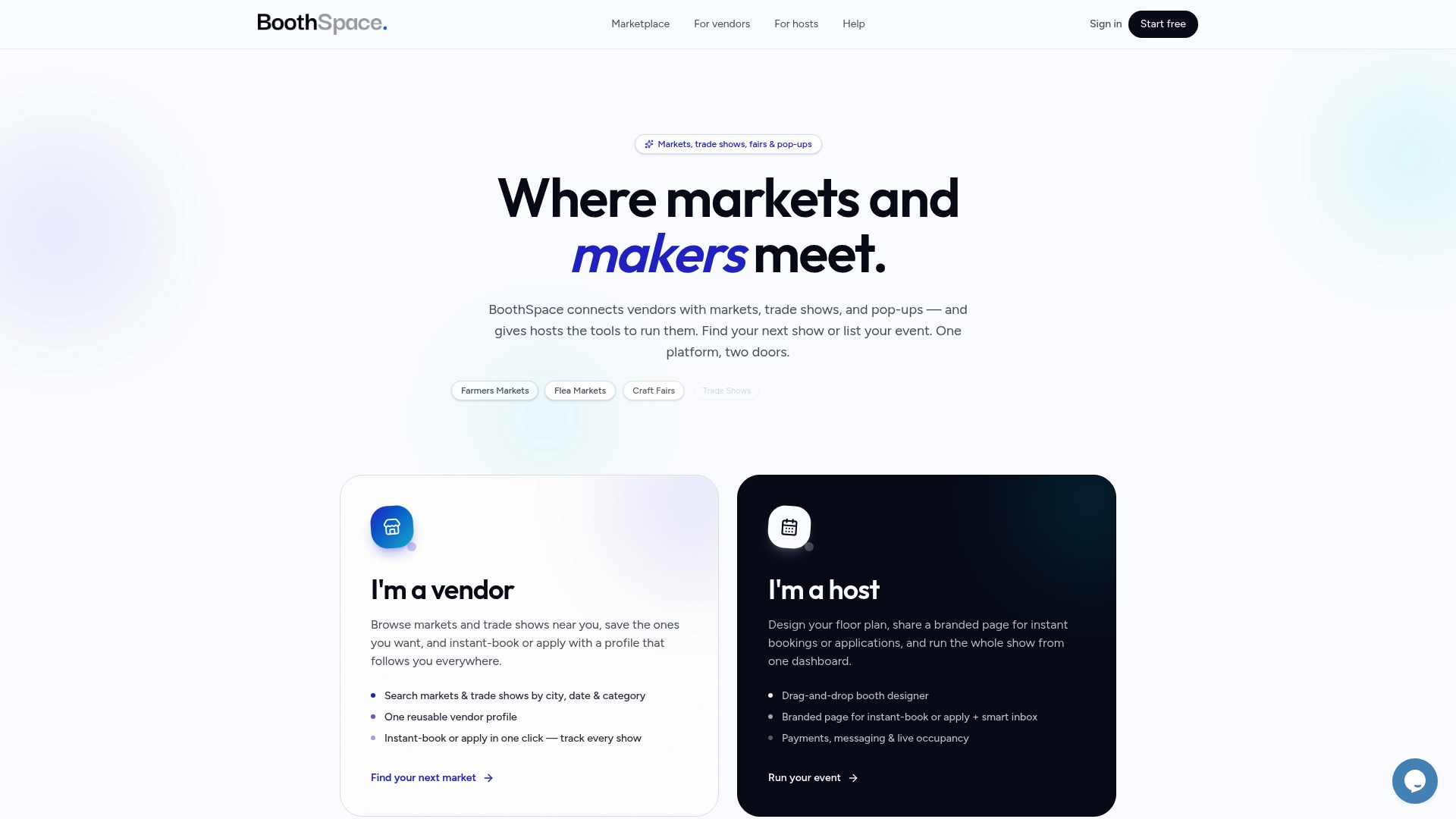
Organizers can use Boothspace's unified messaging tools to send structured pre-event communications, manage booth assignments, and review vendor applications without switching between tools. Vendors get a reusable profile to apply to multiple events, track their applications, and communicate directly with organizers through a centralized inbox. Whether you are running a local craft fair or a large trade show, the Boothspace vendor marketplace connects the right exhibitors with the right events, making every phase of communication faster and more organized.
FAQ
What are exhibitor communication best practices?
Exhibitor communication best practices are structured methods for delivering timely, personalized, and relevant information to exhibitors and attendees across pre-event, during-event, and post-event phases. They include deadline checklists, lead qualification frameworks, and multi-touch follow-up sequences.
How soon should you follow up with trade show leads?
Follow up with hot leads within 24 hours and all other contacts within 48 hours. Leads contacted within 48 hours convert at 5–7 times higher rates than those reached after a week.
What is BANT and how does it apply to trade shows?
BANT stands for Budget, Authority, Need, and Timing. At trade shows, it is a quick four-point mental checklist used during booth conversations to categorize leads as hot, warm, or cold and prioritize follow-up accordingly.
How many follow-up touchpoints should exhibitors plan after an event?
An optimal post-event sequence includes 6–7 touchpoints over 90 days, starting with a personalized email within 48 hours and progressing through insight reinforcement, proof points, educational content, and soft check-ins.
Why do lead capture apps outperform basic badge scanning?
Lead capture apps offer CRM integration, custom qualifying questions, note-taking, offline sync, and real-time reporting. Basic badge scanning captures contact data only, with no qualification context or direct pipeline integration.